
WASH News and Stories

WASH-RAG Goes Global: Rotterdam, IHE Delft and New Partnerships
.jpg)
.jpg)
.jpg)
WASH-RAG had a strong presence at the Rotary European Action Summit in Rotterdam, held September 11–13, 2026. Our booth attracted many visitors, and the WASH-RAG Action Conference & Dinner on September 11 at the Postillion Hotel brought together an engaged and knowledgeable audience for an excellent program of speakers and discussion.
A special thank-you goes to our Regional Coordinator, Dilip Mirchandani, whose hard work helped make WASH-RAG’s participation a success, and to Board member Bas Hendriksen for his important support.
Building a Partnership with IHE Delft
Thanks to Bas, WASH-RAG also had the opportunity to meet with the leadership of IHE Delft Institute for Water Education, one of the world’s leading institutions for graduate education in water.
Chair S. N. Srikanth and colleagues met with Operations Director Han de Groot and his team to discuss potential areas of cooperation, including opportunities for scholars to study at IHE Delft and the development of joint educational programs with certificates issued by both IHE Delft and WASH-RAG. The group also discussed how IHE Delft might support WASH-RAG’s “3 Districts Initiative.”
During the visit, the WASH-RAG team was also invited to a meeting with Rotary International President Yinka Babalola, Rotary International General Secretary John Hewko, Rotary International Directors Dr. Harriette Verwey and Emmanuel Katongole, and others. Srikanth shared WASH-RAG’s vision for helping advance Sustainable Development Goal 6—clean water and sanitation for all—through Rotary and beyond. President Yinka expressed interest in continuing the discussion, and further conversations are planned.
Connecting with Rotary Club H2O
Following the Rotterdam Summit, Srikanth traveled to Basel, Switzerland, where he met with leaders of Rotary Club H2O, including Immediate Past President Christiane Hamacher. The club has a special focus on WASH and brings together Rotarians from Switzerland, Liechtenstein, Germany, and Austria.
The club is interested in closer cooperation with WASH-RAG and is also considering having the club itself become a WASH-RAG member.
The Opportunity for WASH Theme Clubs
These conversations point to an exciting opportunity for WASH-RAG: encouraging the development of more Rotary clubs specifically focused on WASH.
WASH-focused clubs could become important partners in advancing WASH-RAG’s goals, while creating a network of Rotarians with particular expertise, commitment, and interest in water, sanitation and hygiene. WASH-RAG may also explore opportunities to welcome Rotary clubs as members, in addition to individual Rotarians.
We encourage WASH-RAG Board and Operations Team members to participate in Rotary Institutes and District Conferences around the world. These gatherings provide valuable opportunities to introduce WASH-RAG, build relationships and develop new partnerships.
Finally, thank you to Gunes Ertas, our Cadre member and Ambassador, for covering the Rotterdam events and sharing them on social media—and to everyone who helped make WASH-RAG’s presence in Europe such a success.
WASH Ambassadors: Advocating, Growing, and Making an Impact
Update from the Ambassador Program:
First, a big thank you to all Ambassadors for everything that you are doing to be strong ambassadors (advocates) for WASH in your District. Please continue to ask your District leaders (DGs, DGEs, DGNs) to mention how the WASH Area of Focus can help all the other Areas of Focus to be more effective. Just one small example…the economic/community development wants to help create more economic benefits, but men can’t work as much when they suffer from chronic, preventable water-related health concerns, and women can’t be as productive if a lot of their time is spent fetching water (usually from unsafe sources) or they have to repeatedly care for sick family members. It would also be nice for Rotary clubs to follow up on their WASH projects by helping women create small enterprises that they can do when they spend less time fetching water.
Second, we are one-third towards our goal of having at least one Ambassador in every one of the 530 Rotary Districts in the world. But we need your help to recommend someone to be an Ambassador if you work with a Rotarian on WASH projects in a District that doesn’t have an Ambassador (https://www.wash-rag.org/ambassadors/)
Finally, a few thank-yous (which is difficult to do since so many of you are helping a lot), Dilip Mirchandani from Belgium, with help from other Ambassadors in Europe, had a wonderful focus on WASH and the WASH Ambassador program at the Rotary Rotterdam Zone Institute held a few weeks ago. Thank you, Dilip and team! Also, Rick Chinn and Ralph Young from the U.S. have done a lot to process new Ambassador applications, and they have made the process easier and more impactful. We have about 7-10 new Ambassadors joining every month. And finally, Ranjeev Shrestha from Nepal has done a lot to post stories on WASH-RAG’s social media pages, while he helps his fellow Ambassadors and Rotarians deal with the recovery from their terrible floods that made international news. Thank you, Ranjeev, and everyone helping with that terrible humanitarian crisis.

The Well at Katanga
Adile is a young woman from Katanga village, Uganda. Her story shows how access to clean water can change much more than a family’s daily routine—from health and education to women’s leadership and economic opportunity.
The story grew out of our community assessment and illustrates why the proposed Rotary Global Grant takes an integrated, community-led approach to WASH, health, education, and economic empowerment.
.jpg)
.jpg)
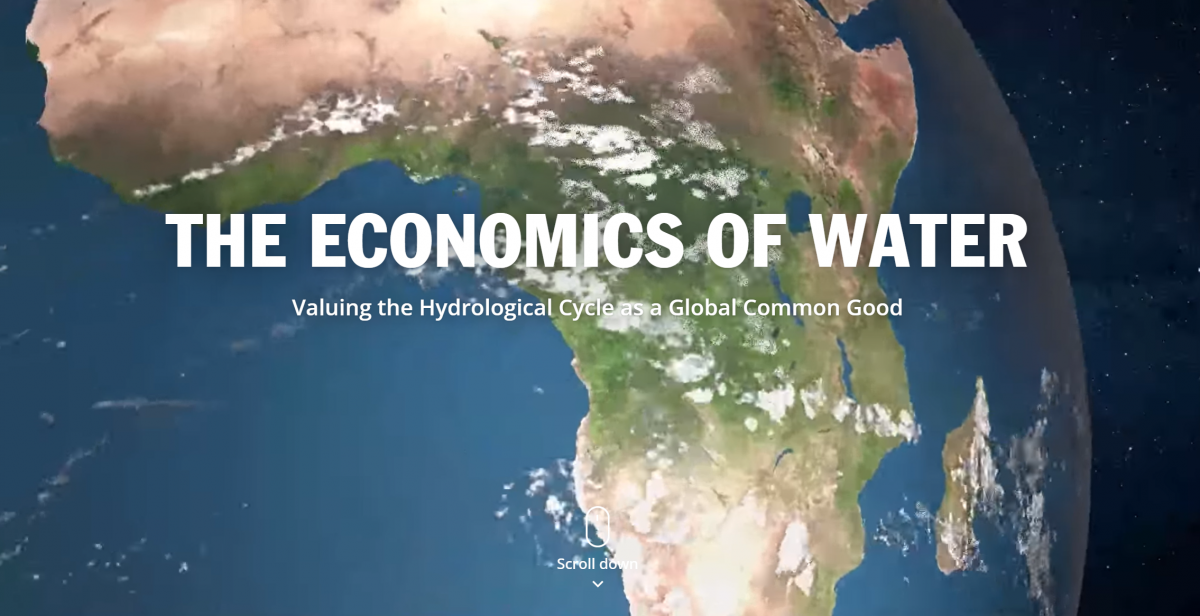
The Economics of Water - Valuing the Hydrological Cycle as a Global Common Good
Be a Handwashing Hero
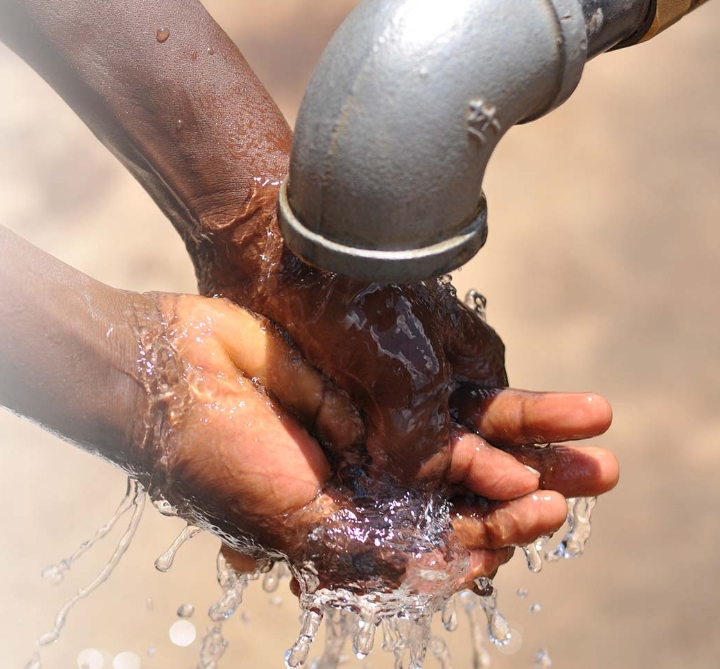
October 15 is Global Handwashing Day, a day to raise awareness and understanding of the importance of washing hands with soap.
The multi-year theme, “Be a Handwashing Hero” is a creative way to encourage people to stop the spread of infections and harmful germs by using soap effectively when handwashing.
Visit their Resources page to get factsheets, infographics, logos and much more, in multiple languages.
The Invisible Threat in Drinking Water
Arsenic in Drinking Water: The Hidden WASH Crisis
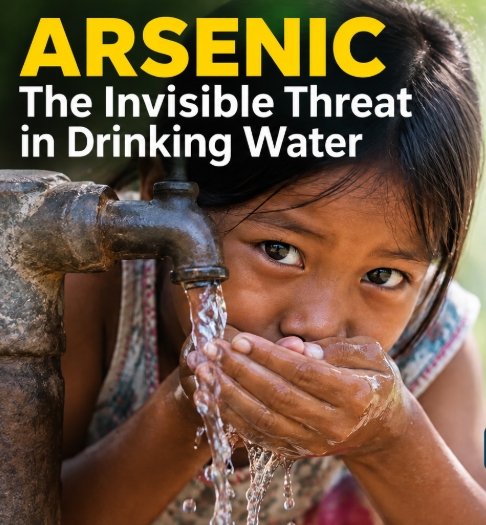
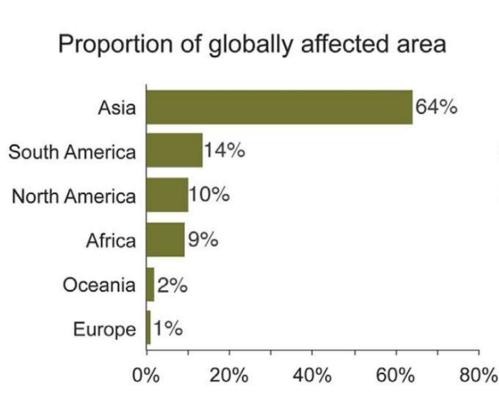
Unsafe drinking water isn’t always visibly contaminated. Arsenic—a naturally occurring contaminant in groundwater—affects millions of people worldwide, particularly in parts of South and Southeast Asia. Because arsenic cannot be seen, smelled, or tasted, people can unknowingly consume contaminated water for years.
Long-term exposure is associated with serious health impacts, including skin lesions, cancers, cardiovascular disease, and diabetes. The burden can also extend to household finances and livelihoods through increased healthcare costs and chronic illness.
The challenge is significant, but solutions exist. Testing can identify contaminated wells, communities can be connected to safer water sources, and treatment technologies can remove arsenic effectively. A project at a primary school near Hanoi, Vietnam, reduced groundwater arsenic from 0.55 mg/L to below 0.001 mg/L, providing safer drinking water to more than 1,000 children and community members.
The key message for the WASH sector is simple: access to water is not enough—water must also be safe. Arsenic testing, public awareness, alternative water supplies, appropriate treatment, health support, research, and sustained funding all have a role to play.
Water Footprint: Concepts, Assessment Methods, and Applications
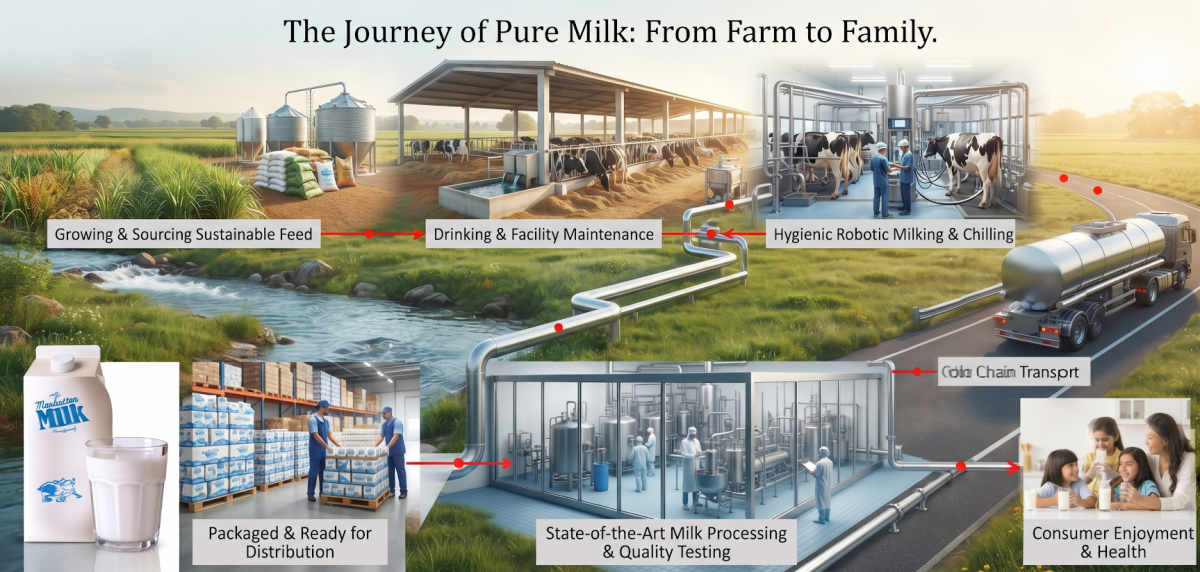
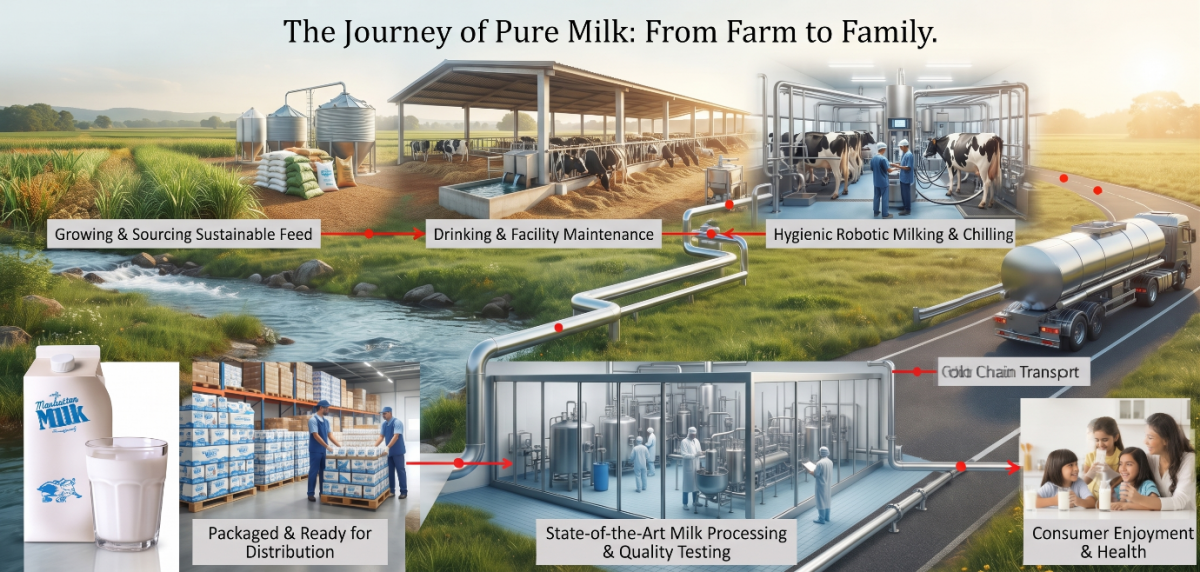
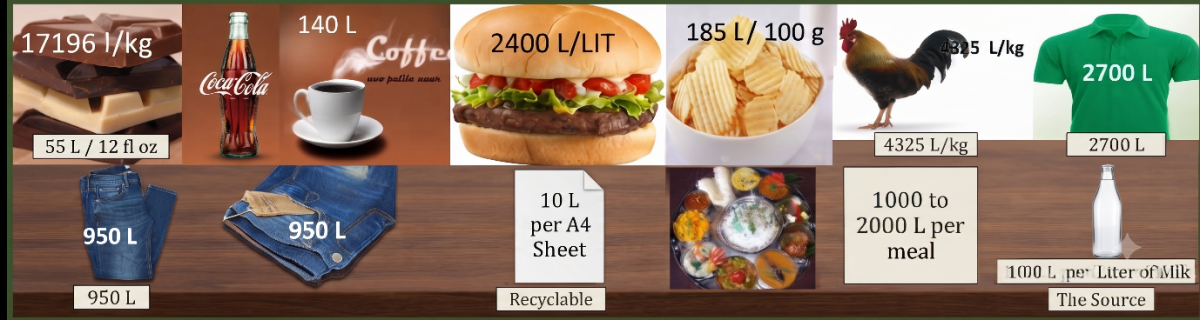
Water use extends far beyond what we see at the tap. The Water Footprint (WFP) measures the direct and indirect freshwater consumed and polluted throughout the lifecycle of products, services, and processes.
By looking at Green, Blue, and Grey Water Footprints, we can better understand pressures on rainfall, rivers, aquifers, and water quality. The approach has applications across agriculture, energy, industry, water infrastructure, and urban development.
From reducing irrigation demand and fixing distribution leaks to reusing treated wastewater and harvesting rainwater, Water Footprint assessment can help identify practical opportunities for more sustainable water management.
Read the full article to explore the concepts, assessment methods, applications, and policy implications of Water Footprint.

AI Corner with Stew: June 2026 on Indicators
AI Corner with Stew:

As you consider whether and how to do a WASH project, or improve a program:
- What tools and indicators actually measure success and impact of a project?
- When do you need to measure them to see if the Outcomes actually happen?
- How long will you need to measure to assure long-term sustainable Impact is achieved?
Here are some "Standard Rotary Indicators" (see WASH Guidelines):
Water and treatment:
- People gaining access to basic drinking water services (and safely managed services)
- Schools or health care facilities gaining access to basic drinking water services (and safely managed services)
- People receiving improved service quality from an existing drinking-water service
- Water quality compared with national standards for microbial and priority chemical contaminants
Sanitation:
- People gaining access to basic sanitation services (and safely managed services)
- Schools or health care facilities gaining access to basic sanitation services (and safely managed services)
- Communities verified as open-defecation-free
- People receiving improved sanitation service quality from an existing limited or basic service
Hygiene and Handwashing:
- Households with soap and water at a commonly used handwashing station
Q: Are these indicators (measures of success) sufficient for your project, or program?
What indicators will you add, so you can determine success?
Take, for instance, a middle school in Madagascar, or Honduras:
- what did your Community Assessment show as important?
- what are the concerns of the teachers, parents? the students? the health officer, education officer?
- how about girls in puberty? disabled students?
To become successful, what behavior change will need to happen:
- in the teachers and headmaster, so they care about WASH, and ensure good clean practices are followed?
- in the health or education officer, so they inspect regularly, insist a school be safe, do WASH well?
- in the county/district school budget, so the school has enough funds for a janitor, plumber, replacement parts?
What indicators will measure whether your theory of change is accurate, and your Inputs and Outputs actually achieve sustainable long-term Impact?
AI Suggestion: Feed your community assessment, map, goals, risks, list of concerns, standard measures, some custom indicators, everything on this topic - - into your favorite AI platform. Ask AI to determine a) a set of custom indicators, b) how often they should be measured, and for how many years until you can be assured that a permanent change has been achieved.
You may be pleasantly surprised!
Then, discuss the indicators and methods of measuring them with a Cadre member in your district or region - ask them for specific advice based on their experience. If you can't find one, write to Cadre@Rotary.org.
Note: Rotary has issued new AI Guidelines (link here) and, among other things, asks you to remove PII (personally identifiable information) and sensitive data from your input to AI. You can do it manually, have an AI programmer help you, or use a Windows program called CamoText.
Projects and Programs
Projects and Programs
Introduction:
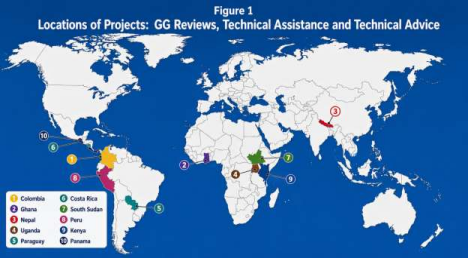
The Projects and Programs team has been working hard during the past couple of months on a variety of projects. We are glad to inform the readers that the Rotary Foundation has approved seven WASH Projects. The projects that were approved are from the following countries: Peru, Paraguay, and Costa Rica located in Central and South America, and Kenya, Ghana, and South Sudan located in Africa. Further, three Global Grant Applications are being reviewed, and $600 was awarded to the RC of Ratna Nagar, Nepal, for preliminary engineering studies. Finally, as part of providing technical advice, the team provided a hydrologic memorandum to the Rotary Club of Mount Shasta, CA, and a note for a water treatment approach to remove iron from groundwater to the Rotary Club of Paducah, KY. Figure 1 shows the locations of the various countries where the projects are ongoing.
We also had our team meeting on May 9th where we discussed the role of reviewers and quality assurance in the reviews. Stew Martin, Technical Officer and Cadre, made a presentation entitled “Professional Rotary WASH Global Grant Review” to the attendees. Further, Projects and Programs Vice Chair, Richard Chinn, presented a draft Flow Chart that described the Global Grant Review by the Projects and Programs Team. We hope to upload the flowchart on the website so that the members know WASHRAG’s Global Grant Review Process
In the following pages, we have summarized the various WASH Projects that have been approved by the Rotary Foundation.
Ghana: GG2686335: Mpintsin Ghana Water Project
The Mpintsin community in Ghana’s Western Region will gain reliable access to safe drinking water through a connection to a nearby treatment facility supplied by the Pra River. The project will install HDPE pipelines, standpipes, and smart meters serving two hundred households, a school, and a market. With more than 10,000 residents currently dependent on limited and often unsafe water sources, the project will improve public health, reduce water collection burdens on women and children, enhance safety, and provide lasting social and economic benefits.
Colombia: GG2575183 – Water Source of Light
This project will improve access to safe drinking water for schools in the rural communities of Laurel, La Camelia, Pueblo Rico, El Jardín, La Morelia Baja, and La Sagrada Familia in Quimbaya, Colombia. Water treatment plants will be installed to convert untreated agricultural water into potable water, complemented by storage tank upgrades, civil works, and hygiene education. Benefiting approximately eight hundred people, the project will promote healthier learning environments, sustainable water use, and improved community well-being.
Kenya: GG 2688239 -Kasule Community Health Facility Integrated Solar and Water Project
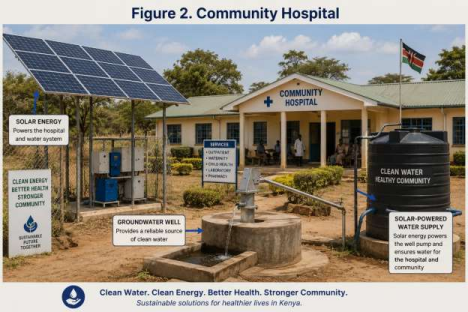
This project will provide clean, dependable, and affordable water to the Kasule Community Health Clinic and surrounding village, benefiting women and children most affected by water scarcity. The initiative includes upgrading the clinic’s solar power system to support water pumping, maternity services, laboratory operations, vaccine storage, and lighting. Improved sanitation facilities and community hygiene training will also be provided. Together, these improvements will enhance health services and benefit more than 2,500 patients and community members each month. Figure 2 is a schematic of the project.
Peru: GG 2687157 – Tomacaya Peru Water Distribution System Project
The Tomacaya Water Distribution System Project will provide the rural Andean community of Tomacaya, Peru, with reliable access to safe drinking water through a sustainable gravity-fed distribution network. The project will replace aging infrastructure, construct new water intake and storage facilities, and improve service to homes and community buildings. Benefiting six hundred–
seven hundred residents, the initiative will enhance public health, reduce the burden of water collection, and support local agriculture, small businesses, and long-term community development.
South Sudan: GG2460746 - Enhancing Water and Agriculture (WAG) Initiatives in Mangalla IDPs Camp, South Sudan.
Severe malnutrition continues to threaten children under five and pregnant and breastfeeding women in South Sudan. This project will improve food security, water access, and livelihoods for 50,000 internally displaced people in Mangalla, while benefiting more than 150,000 host community members. The initiative includes upgrading a community well with a new submersible pump, constructing a water storage tank, establishing a greenhouse, and launching a fish-farming program. Together, these efforts will strengthen nutrition, increase food production, and enhance community resilience.
Costa Rica: GG 2684768 - Improving 7 Communal Aqueducts' infrastructure in the Province of Guanacaste Phase 3, USD 64,673
This project will modernize aging water infrastructure in the Guanacaste communities of Nicoya, Carrillo, Hojancha, and Santa Cruz, Costa Rica. Much of the existing system is 35 to 50 years old and no longer meets current water demands. The project will repair, replace, and expand key water facilities to improve reliability and address population growth and changing water availability. Damaged hydrants, affected by repeated earthquakes, will also be replaced, strengthening community resilience and ensuring a more sustainable water supply.
Paraguay: GG 2577162 -Agua Segura, Comunidad Viva, (Safe Water, Long Life)
This project will provide safe drinking water to the rural communities of Fracción Aromita I, María Alejandra, and La Esperanza in Encarnación, Paraguay. The initiative includes drilling a 150- meter-deep groundwater well, installing a submersible pump, constructing a 30,000-liter elevated water tank, and developing a community water distribution network. In addition, residents will receive water, sanitation, and hygiene (WASH) training to promote proper resource management, improve public health, and ensure the long-term sustainability of the system.
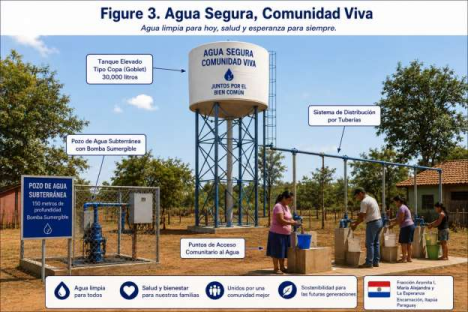
(Note: Illustrations were created with AI assistance; they do not represent any individual or individuals, and some editorial assistance was used but verified by a human reviewer.)
Why WASH-RAG Membership Matters
Joining the Water, Sanitation and Hygiene Rotary Action Group (WASH-RAG) empowers Rotarians, Rotaractors, and professionals with expert guidance, global partnerships, and practical resources to deliver sustainable, high-impact WASH projects. From strengthening Global Grant success and funding opportunities to improving long-term community health, education, and safety, WASH-RAG helps members move beyond infrastructure to lasting change. Read the full article to learn how WASH-RAG can amplify your impact worldwide.
Sign-Up for Our Newsletter
Get news from WASH Rotary Action Group to your inbox.
By submitting this form, you are consenting to receive marketing emails from: WASH Rotary Action Group, 5344 SE 67th Ave, Okeechobee, FL, 34974, US, https://wash-rag.org/. You can revoke your consent to receive emails at any time by using the Unsubscribe link, found at the bottom of every email. Emails are serviced by iMembers.
